
At the start of a meditation, it is easy to wonder whether you are doing it correctly. The shoulders may be tense, the mind already busy, and the breath hard to notice. Begin with what is actually here; the practice does not require a special mood.
Settle into a steady posture
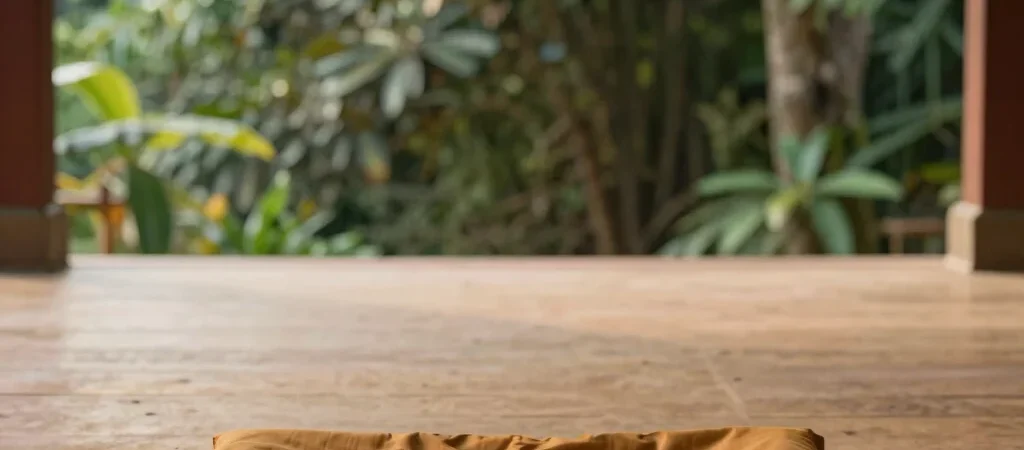
Choose a quiet place and sit in a way you can maintain without strain, on a cushion or a chair. Let the back be upright but not rigid, and allow the hands to rest. Close the eyes gently, or lower the gaze if that feels more comfortable.
Let breathing be known
Notice the breath where it is easiest to feel it: perhaps at the nostrils, chest, or abdomen. There is no need to deepen or control it. When attention wanders, recognize that it has wandered and return to one breath, without scolding yourself.
Practice without a score
A session is not measured by how long the mind stays still. Each time you notice distraction and begin again, you have a chance to meet the moment with patience. This modest approach fits the simplicity often associated with the Thai Forest Tradition: attend carefully to experience rather than chase a special state.
If you are exploring the meditation guidance shared through Monk Cho and the teachings of Phra Ajahn Maha Kitsada, let this be a simple starting point, not a promise of a particular outcome. Sit for a few minutes, notice the next breath, and carry that same care into what you do afterward.